Rega

He sent nine messages in four minutes. Then the group removed him.

Rega is a companion that lives on the phone of a child who cannot stop themselves. It reads the moment as it builds, and speaks to them in the seconds before send.

6B
Class 6B
14 members
Message
Hang on a second.
You've sent four in two minutes. This group always goes quiet after nine — that's how it is here, it isn't about you. Maya and Adam both answered you yesterday.

The spiral has a shape, and it is always the same

A message goes out. Nobody answers. For most children that is a mild irritation. For a child who cannot read silence, it is an emergency — silence means something is wrong, something is wrong means someone is angry, and someone being angry has to be fixed right now.

So they ask. Then they ask again, because asking did not resolve the feeling. Then they explain themselves. Then they apologise for something nobody accused them of. Every message makes the next one more likely, and every message makes the other side less likely to reply. By the ninth, the group is not annoyed any more. They are overwhelmed, and they remove the child to make it stop.

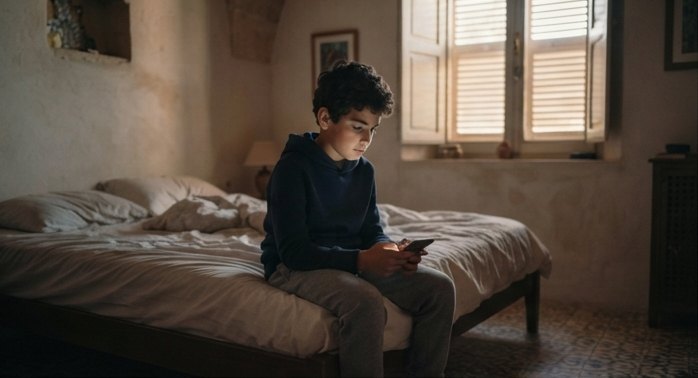
A boy sitting alone on the edge of his bed in a dim room, looking down at his phone.
9:41pm. Nothing has come back yet, and the silence is already being filled in.
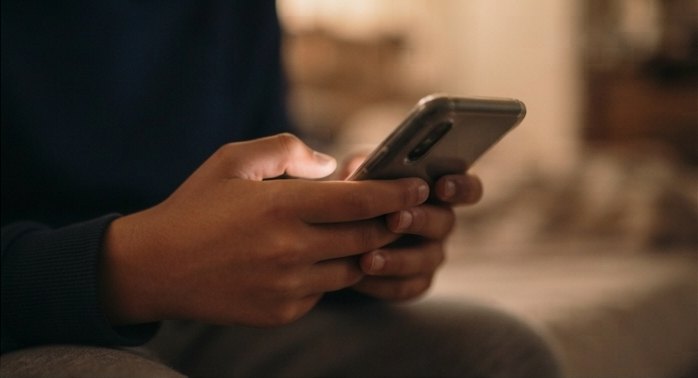
Close view of a child's hands holding a phone.
By the fourth message he is not really choosing any more. He is trying to make a feeling stop.

The child is not being aggressive. They are frightened, and the phone is the only thing in reach.

Why we built this

My son has been removed from four group chats. Twice from his own class group — the one where the homework gets posted, where the plans for the weekend get made, where being outside of it means being outside of everything.

Every time, the shape was identical. Someone did not reply. He asked if they were angry. He asked again. He asked what he had done. By the time I saw his phone it was over, and the part that broke me was not the removal. It was that he genuinely did not know what had happened. He could not reconstruct it. He had lost friends and could not tell me why.

Nothing on his phone was built to help him. Monitoring apps would have told me afterwards, which is useful for me and useless for him. Social skills apps taught him rules on a Sunday that he could not reach for on a Tuesday night. What he needed was something present in the ten seconds while it was happening, that knew who he was talking to and could say the one thing that would land.

He didn't need a rule. He needed someone to catch his hand.
Founder, Rega

Who this is for

Rega is built for children who understand social rules perfectly well in the abstract, and cannot apply them under pressure. The gap between knowing and doing is where friendships are lost.

Children on the autism spectrum

Who read messages literally, miss the tone underneath them, and take "can't today" as a verdict on the whole friendship rather than a fact about today.

Children with ADHD

Who type faster than they think, hit send before the thought has finished forming, and see what they wrote only once it is already in front of fourteen people.

Children with social anxiety

For whom an unanswered message is not neutral. Silence gets filled in with the worst available explanation, and the only relief is to ask again.

Children who get stuck in a loop

Where one worry takes hold and cannot be put down until it is resolved — and resolving it means another message, and another, until someone makes it stop.

Who it is not for

Parents who want to read their child's conversations. Rega does not show you the messages, and it never will — that is the reason children keep it installed. If you need visibility, a monitoring app will serve you better than we can.

What Rega does in that moment

It sees the pattern forming

Four messages to the same person in two minutes with nothing coming back. Rega recognises the shape because it has watched this child go through it before, and it knows what usually comes next.

It speaks before the send

A card opens over the keyboard, in words the child understands, using what it knows about this particular friendship. Not a block — a friend saying wait. They can always send anyway, and that never counts against them.

It gives the feeling somewhere to go

"Remind me in an hour" turns an impulse into a plan. An hour later Rega comes back with a suggested opener — and most of the time the reply arrived long before that.

The same boy, calmer, looking up from his phone towards a window.
An hour later, the reminder arrived — and so had the reply.

Their messages stay theirs

Rega is not a monitoring app. A child who believes their conversations are being read will uninstall it, or stop talking to their friends. Neither outcome helps anyone.

  • Message content is read on the phone itself and never stored.
  • Parents see patterns — how often, what kind, whether things are improving — never what was said.
  • The child chooses who receives their weekly summary, and can share with a therapist without sharing with a parent.
  • No data is sold, and there is no advertising.

One exception, explained to the child on the first day: signs of grooming, exploitation or self-harm always reach a guardian. A privacy promise that quietly breaks is worse than one honestly explained.

For therapists

A weekly session runs on what the child can recall. Rega was present for all of it, and turns the week into something you can work with.

Times the pause was accepted21 / 34
Same figure four weeks ago9 / 41
Recurring triggerCancelled plans
Wording he responds toQuestions, not facts

You can write back into Rega — adjust how it speaks to him, and set what it should watch for this week. What you agree in session on Tuesday is what he hears on Thursday night.

Rega is being built now

We are looking for families and clinics on Android to try the first version. If the spiral on this page is familiar, leave your email and we will be in touch.

Thank you — we will be in touch.